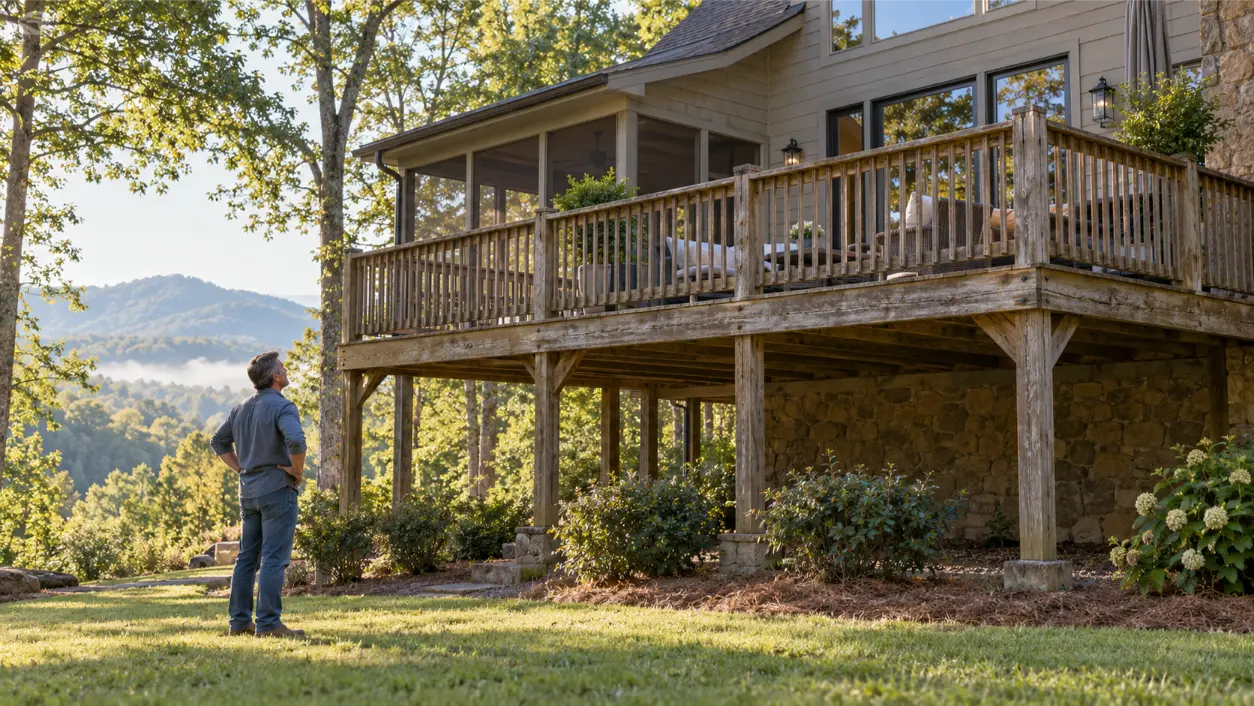
Recognizing unsafe deck signs matters most when an ordinary backyard becomes the center of a family celebration.
An older deck may seem comfortable for two people drinking coffee, yet that does not establish that its framing, connections, railings, and stairs are suitable for a party. Before inviting guests onto a deck in Dahlonega, Gainesville, Cumming, Roswell, or North Atlanta, look for visible warning signs and understand what a qualified inspection must determine. If you suspect structural damage or instability, keep people off the deck until a qualified professional evaluates it.
Can an Old Deck Safely Hold a Large Gathering?
There is no reliable guest-count shortcut. The safe use of a deck depends on its actual design, dimensions, age, condition, connections, support system, modifications, and the requirements applicable to that structure. The weight and concentration of people, furniture, and equipment matter, but homeowners cannot calculate a trustworthy capacity from appearance or a generic internet number.
Nor should you ask several friends to stand together, jump, or bounce on the deck as a test. A questionable deck should not be deliberately loaded to see what happens. The North American Deck and Railing Association (NADRA) emphasizes regular checks and experienced professional evaluation because weathering, corrosion, and concealed defects can affect structural safety. A professional may need to examine areas that are not visible from the walking surface.
1. The Deck Moves, Sways, or Feels Different Than Before
Unexpected lateral sway, a noticeable change in level, rocking, or a new shifting sensation can indicate a problem with supports, bracing, connections, or the framing. Even if the movement is subtle, it deserves attention when it is new or worsening. A deck that visibly separates from the house or shifts around its posts is an especially serious concern.
Do not repeatedly walk across the structure to reproduce the movement. Make a note of what you observed during ordinary use, restrict access, and contact a qualified deck inspector, structural specialist, or other appropriate professional. The absence of noticeable movement, however, does not prove that hidden connections are sound.
2. The Deck-to-House Connection Looks Loose or Water-Damaged
For an attached deck, the ledger is a structural member connecting the deck to the home. Problems here may be difficult to spot because trim, siding, or flashing can conceal the attachment. Warning signs include an unexpected gap opening at the house, visible deterioration near the connection, displaced flashing, water damage, or obviously loose hardware.
The American Wood Council’s deck resources explain why correct deck-to-house attachment and guard connections matter. Nails alone should not be assumed to provide an adequate ledger connection, and a homeowner cannot verify hidden fastener size, spacing, or soundness by looking at the decking. Avoid removing siding or attempting temporary structural fastening yourself. Have the connection evaluated before further use if deterioration or separation is suspected.
3. Joists, Beams, Posts, or Deck Boards Show Rot
Wood decay can develop where moisture repeatedly collects, especially near the house, beneath planters, around fasteners, or at poorly ventilated joints. Look from a safe location for darkened areas that stay wet, crumbling or splitting wood, obvious deformation, or areas that appear to have lost material. Surface weathering alone does not establish structural rot, but soft or deteriorated structural members need investigation.
Pay particular attention to the difference between a worn deck board and deterioration of a joist, beam, post, or ledger supporting the deck. Replacing one surface board may not address deeper structural problems. Do not climb beneath an unstable deck or poke its framing to test strength. A qualified professional can determine whether decay is cosmetic, localized, or serious enough to change the repair decision.
4. Connectors and Fasteners Are Corroded, Missing, or Pulling Away
Metal hardware keeps different parts of a deck working together. Visible red rust, loosened joist hangers, missing connectors, withdrawing fasteners, or distorted brackets deserve attention, especially around major supports and railings. Some superficial staining does not establish that a connector has failed, but severe corrosion may weaken an important structural connection.
The International Code Council’s Building Safety Journal discusses rusted deck connectors and fasteners as a warning that warrants qualified evaluation. North Georgia decks are not all exposed to coastal salt conditions, but persistent wetness and incompatible materials may still affect hardware over time. Do not assume a fresh screw or bracket from the hardware store is an adequate repair without understanding the original structural detail.
5. Posts, Footings, or the Ground Around Them Have Changed
Look from stable ground for posts that are visibly leaning, detached from their bearing points, badly split near the bottom, or in contact with persistently wet soil. Notice cracked or displaced concrete support points, washed-out soil, or erosion around a footing. These conditions can change how loads pass from the deck to the ground.
Support failures are not always obvious from the surface. Landscaping, changes in drainage, or previous excavation may have altered conditions around an older deck. A professional should evaluate any significant settlement or movement rather than relying on an improvised support block or surface patch.
6. Railings and Guards Feel Loose or Have Damaged Connections
Railings and guards are not just decorative trim. Their posts, attachments, rails, and infill need to perform their safety function when people lean or lose their balance. A wobbling guard post, broken rail, loose baluster, or visibly deteriorated connection is a reason to keep guests away from the area and obtain professional evaluation. Do not deliberately push hard against a suspicious railing to see whether it will hold.
For a gathering, children and groups naturally spend time near the perimeter. Furniture should not be positioned to encourage climbing or leaning on guards. A newly painted rail can still hide damaged wood or poor fastening; appearance and structural adequacy are different questions.
7. Stairs, Landings, or Handrails Are Unstable
Stair problems become more serious when guests are carrying food, moving between levels, or using the deck after sunset. Watch for loose or uneven treads, visibly cracked stair stringers, shifting landings, disconnected handrails, or a change in the position of the stair assembly. Uneven steps and clutter are also trip hazards even if the structure is otherwise sound.
A professional should assess any suspect stair structure and the attachment to the deck. Clearing leaves, cords, and planters from walking routes can improve housekeeping, but it does not repair weak framing or damaged handrails.
8. The Surface Has Openings, Sagging Areas, or Repeated Moisture Problems
Loose deck boards, large splinters, holes, protruding fasteners, and slippery debris can lead to falls. A sagging area or a deck surface that changes noticeably under normal footsteps also raises questions about the framing below. Composite boards and newer surface finishes can still be installed over older supporting structures, so do not take a recently refreshed surface as proof of structural soundness.
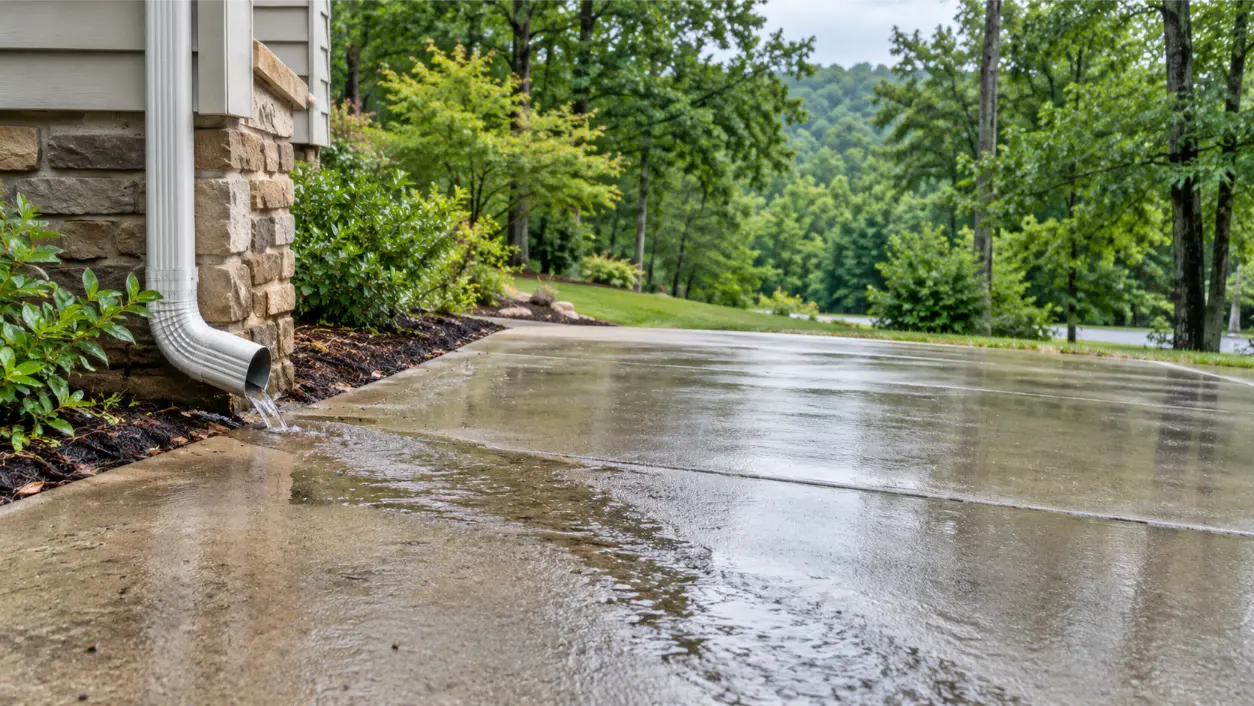
Look for downspouts emptying near posts, water trapped against the house, or planters that leave framing wet for long periods. Managing moisture matters, but cleaning or resealing the surface alone will not restore decayed load-bearing members.
9. Past Alterations Add Weight or Change the Original Design
Owners sometimes add heavy planters, storage, large outdoor kitchens, shade structures, or other features after the deck was built. A covered porch or screened enclosure can introduce additional requirements beyond those of the original open deck. A change in how the space is used can justify professional review even when there are no dramatic visible defects.
For entertaining, spread-out seating and an uncluttered exit route are sensible planning details, but neither substitutes for determining whether the existing deck is structurally suitable. Do not make a capacity claim from square footage alone. Ask a qualified professional to evaluate proposed modifications and applicable local permits and building standards.
A Safe Pre-Party Visual Checklist
This is a visual screening checklist only, not a structural inspection or permission to occupy a questionable deck. Observe from safe, accessible locations without load testing, climbing under compromised framing, removing panels, or dismantling connections.
- Recall whether the deck has recently shifted, swayed, or changed level during ordinary use.
- Look for gaps or obvious water damage where an attached deck meets the house.
- Observe accessible framing, posts, and board edges for significant decay or cracking.
- Look for rusted, missing, bent, or visibly loosened hardware.
- Notice leaning posts, eroded soil, or displacement at supports and footings.
- Check visually for damaged railings, guard posts, or balusters without stressing them.
- Review stairs, handrails, and landings for visible movement or damaged parts.
- Identify holes, raised fasteners, severe splinters, or slippery walking surfaces.
- Record heavy additions and any changes made since the original construction.
- If anything suggests instability or structural deterioration, prevent access and arrange a professional evaluation before hosting.
When Should You Stop Using the Deck Immediately?
Keep the deck off limits when you observe significant sway, separation from the house, visibly compromised supports, serious rot in structural members, badly corroded primary connections, unstable guards or stairs, or other conditions suggesting failure. Do not let guests gather on part of a questionable deck while another section is being checked. Use an alternative ground-level gathering space until a qualified professional determines what is required.
Even without obvious warning signs, consider professional inspection for an older deck with unknown construction history, previous repairs, or a major planned change in use. NADRA’s deck evaluation resources outline the structural areas that a trained reviewer may examine, including footings, posts, beams, joists, ledgers, stairs, and guards.
Repair or Replace: What Should the Inspection Answer?
Some defects are localized, while others affect the deck’s basic structure. An evaluation should identify the condition of load-bearing members, the deck-to-house attachment if applicable, support connections, stairs and guards, drainage factors, and whether the intended use is appropriate for the existing design. The homeowner should request a clear written explanation of the findings and of any recommended restrictions.
A limited repair may be appropriate when a qualified professional verifies that the remaining structure is sound and the required corrective work is well defined. Replacement may make more sense where deterioration is widespread, several critical components require major changes, or the current layout no longer meets household needs. No cosmetic refresh should be described as making a structurally deficient deck safe without evaluation of the underlying system.
Gold City Construction offers custom deck construction and deck replacement, along with covered and screened porches across North Georgia. Its project gallery can help homeowners think about the appearance and practical layout of a replacement. For a suspected structural hazard, obtain an appropriate qualified safety assessment first; a free construction estimate is not automatically an engineering inspection or certification of deck capacity.
Frequently Asked Questions
What are the clearest signs an old deck is unsafe?
Unexpected movement, separation from the house, visibly rotten framing, severely corroded structural connections, leaning supports, and unstable stairs or railings are important warning signs. Absence of visible problems does not guarantee safety.
My deck moves when people walk on it. Is that normal?
A new or noticeable movement should not be dismissed. Stop using the deck if instability is suspected and arrange qualified evaluation. Do not test it by adding people or jumping.
Can my deck hold a large family gathering?
No reliable capacity can be determined from a guest count, a photograph, or generic square-footage advice. The answer depends on design, connections, condition, modifications, and applicable standards. A qualified professional must evaluate the specific deck.
Are rotten deck boards as serious as rotten joists?
Both deserve attention, but joists and other structural framing members are essential to the support system. A damaged surface board may be a localized problem; hidden rot in framing or connections can require much more extensive work.
When do deck railings need replacement?
Visible looseness, deteriorated guard posts, damaged rails, or compromised connections require professional attention. Whether reinforcement or replacement is appropriate depends on the condition and design, not appearance alone.
Should I repair or replace a 20-year-old deck?
Age raises the importance of inspection but does not dictate the answer. An informed decision considers the condition of the full structure, prior repairs, current requirements, and the cost and suitability of corrective work.
Plan an Outdoor Space That Fits How You Gather
If your existing deck has warning signs, make safety the first priority and postpone using it until it is appropriately evaluated. If replacement is needed, Gold City Construction helps homeowners in Dahlonega, Gainesville, Cumming, Roswell, North Atlanta, and surrounding communities plan decks and porches built around the home, property, and intended use. Review the company’s project-planning FAQs or request a free project estimate to discuss a potential replacement or new outdoor living layout. Scope, timing, and permitting depend on the property and local requirements.
Disclaimer: This article provides general homeowner safety and construction information, not a structural inspection, engineering determination, or assurance of deck capacity. Serious or suspected structural deficiencies require qualified on-site evaluation; restrict access until the condition is resolved. Applicable building codes, permits, design loads, and repair methods depend on the deck and local authority. Do not use these observations as a substitute for professional advice.
RELATED LINK: North American Deck and Railing Association — Deck Safety Resources