If you are buying house with cracked driveway concrete, the crack itself is only the starting clue. Some cracking can occur in slabs-on-ground without meaning the driveway has failed, while other patterns can point to settlement, poor drainage, loss of support, or sections that may need replacement. For a prospective North Georgia homebuyer, the useful question is not simply, “Is the driveway cracked?” It is, “What caused the cracking, is the surface still moving, does water collect or run toward the house, and how much future work should I plan for if I buy the property?”
A Crack Is a Symptom, Not a Diagnosis
Concrete is not expected to remain perfectly crack-free forever. The American Concrete Institute notes that slabs-on-ground can develop cracking and curling even when they are properly designed and constructed. Shrinkage, temperature change, restraint, soil movement, and settlement can all contribute.
A thin, stable crack does not automatically make a driveway a major purchase risk. Pay more attention to whether one side is higher, the crack is widening, several cracks form a larger pattern, or nearby slabs are sinking.
Start by Looking at the Crack Pattern
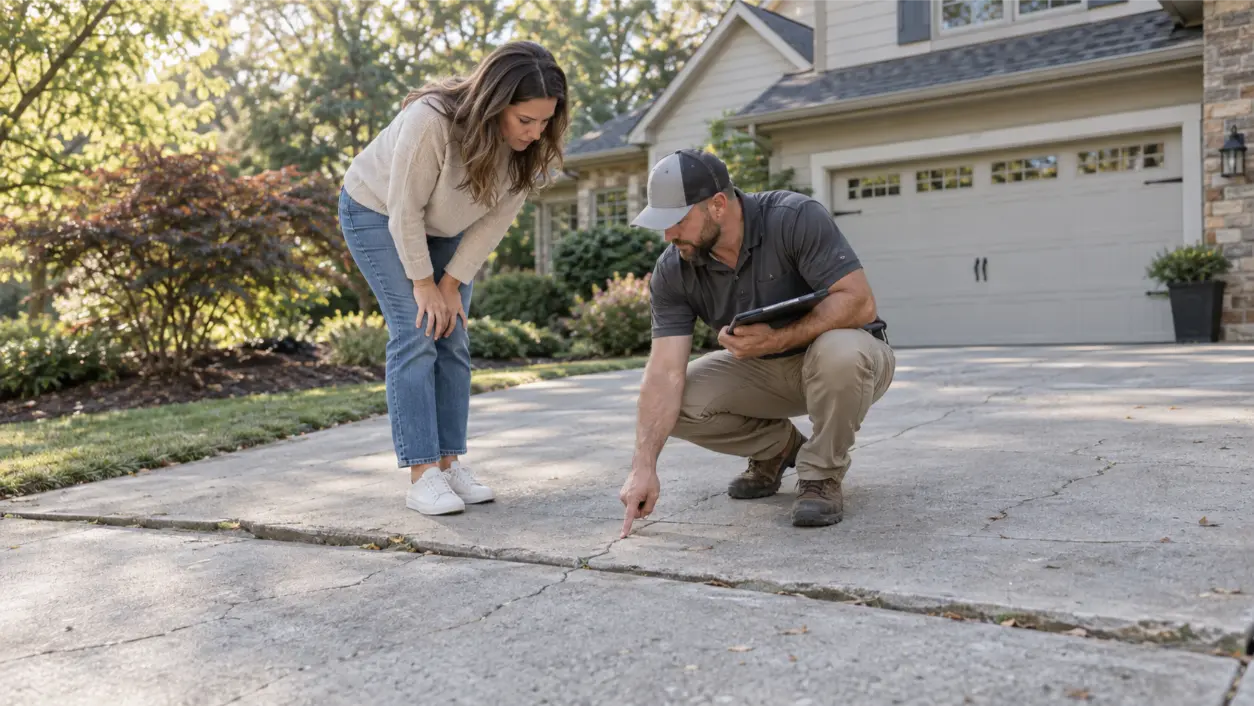
Before thinking about repair cost, look at the pattern across the entire driveway. A single narrow crack near a control joint tells a different story than multiple intersecting cracks across a sunken panel.
Isolated Hairline or Shrinkage-Type Cracks
Small, relatively uniform cracks can develop as concrete shrinks and moves. They may be primarily cosmetic if the surrounding slab remains level, stable, and well drained. They still deserve inspection, but they should not automatically be treated like structural foundation cracks.
Wide or Widening Cracks
A visibly wider crack deserves more attention, especially when edges are breaking apart or the opening appears to have changed. Ask whether repairs were made before and whether the crack re-opened.
Map or Alligator-Style Cracking
A network of cracks across a larger area can suggest widespread surface deterioration or movement. The practical concern is not the name of the pattern but how much of the driveway is affected and whether repair would mean treating one crack or replacing multiple panels.
Cracks With Vertical Displacement
When one side of a crack sits higher than the other, the issue is no longer only appearance. Differential settlement or soil movement can change slab elevations, and the raised edge can become a trip point, affect vehicle access, and indicate that support under the slab is no longer uniform.
Check for Settlement and Uneven Concrete
ACI guidance on slabs-on-ground notes that differential soil settlement or expansion can create stress that leads to cracking and elevation changes. During a home purchase, look beyond the cracks themselves and check whether panels have sunk, tilted, or separated vertically.
Walk the driveway from the street to the garage. Pay attention to transitions between slabs, changes in slope, edges that no longer align, and areas where vehicles would cross a raised joint. If the driveway meets a garage slab, check whether the transition is still smooth enough for normal access.
Gold City Construction currently lists uneven sections, sinking concrete, drainage problems, large cracks, and widespread surface damage among the conditions that can make driveway replacement worth considering.
Look at the Driveway After Rain if Possible
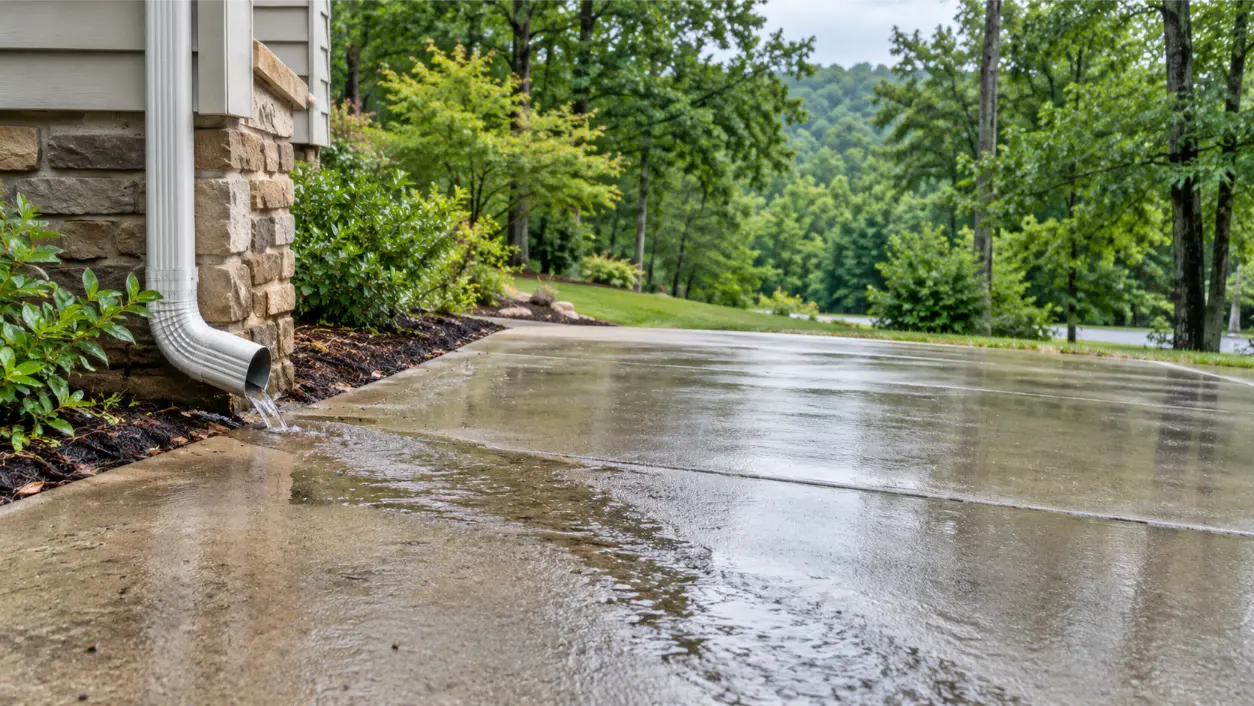
A dry driveway can hide one of the most important future-cost clues: drainage. UGA Cooperative Extension explains that driveways are impervious surfaces, so rain that cannot infiltrate becomes runoff and follows the property’s slope and drainage paths.
If possible, visit during or soon after rain. Look for standing water, dark areas that stay wet, sediment trails, erosion along the slab edges, water crossing toward the garage, and runoff being directed toward the foundation or neighboring property.
A cracked driveway with good drainage may present a very different risk than a driveway where settled sections create ponds or funnel water toward the house.
Check the Garage Approach and Foundation Side Carefully
The area closest to the garage deserves extra attention because it affects access and water management. Look for a low spot directly in front of the garage, a slab that pitches toward the door, deteriorated concrete at the threshold, or evidence that water regularly reaches the garage.
Do not assume a driveway crack means the foundation is damaged; driveways are typically separate slabs-on-ground. But runoff toward the structure, major elevation changes, or other signs of movement may justify specialist review.
Look for Signs the Base or Soil May Have Moved
Concrete performance depends partly on the support beneath it. Surface clues that may justify a closer look include:
- Voids visible along slab edges.
- Washed-out soil beside the driveway.
- Depressions where runoff repeatedly crosses.
- Large roots lifting or disturbing sections.
- Slabs that rock or sound hollow in isolated areas.
- A driveway edge dropping toward an eroded slope.
- Repeated patches where settlement has been repaired before.
These clues do not identify the exact cause by themselves. They help you decide whether the problem is likely to be a simple surface repair or a larger site and concrete issue.
Review Previous Repairs Instead of Assuming They Solved the Cause
Repairs can help, but they also reveal history. Look for filled cracks, mismatched panels, resurfaced sections, grinding at raised joints, or newer concrete beside older slabs.
Ask what was repaired, why it was needed, and whether drainage or settlement was addressed. A crack that repeatedly reopens deserves closer review.
Check Whether the Driveway Still Works for the Property
Also check whether the driveway layout fits your household: parking capacity, garage access, turning room, and whether an extension may be needed.
Gold City Construction provides driveway replacement and driveway extensions as well as new installation and flatwork. If the existing concrete is already nearing replacement and the layout also needs more parking or better access, combining the future work may make more sense than repairing a driveway that no longer fits how you plan to use the property.
Separate Repair Questions From Replacement Questions
Not every cracked driveway needs to be replaced. The decision becomes more serious when several issues occur together: widespread cracking, sinking sections, vertical displacement, standing water, failing edges, repeated repairs, and a layout that no longer works.
A local concrete contractor can help determine whether repair is realistic or removal and replacement is the better long-term option. Before closing, the goal is to understand the likely future-cost category.
What Drives the Cost of Replacing a Driveway After Purchase?
Gold City Construction does not publish fixed driveway pricing, and a responsible pre-purchase article should not invent a per-square-foot figure. Replacement cost can vary with factors such as:
- Total driveway area and thickness required for the project.
- Demolition and removal of existing concrete.
- Access for equipment and hauling.
- Site slope and grading.
- Base preparation and soil conditions.
- Drainage corrections.
- Reinforcement and joint layout specified for the project.
- Tie-ins to the garage, sidewalk, apron, or existing concrete.
- Curves, extensions, parking pads, or layout changes.
- Local permit, right-of-way, or disposal requirements where applicable.
For purchase planning, a site-specific estimate is more useful than a generic cost range.
Use the Home Inspection as a Starting Point
A home inspector may flag cracking, settlement, trip hazards, drainage, or deteriorated concrete. Treat that notation as a starting point for follow-up rather than a complete repair design.
If the report simply says “driveway cracked,” ask for photos and context: vertical displacement, standing water, settlement, and drainage direction. Broader movement may justify an engineer or other specialist; exterior-flatwork concerns may be appropriate for a concrete contractor.
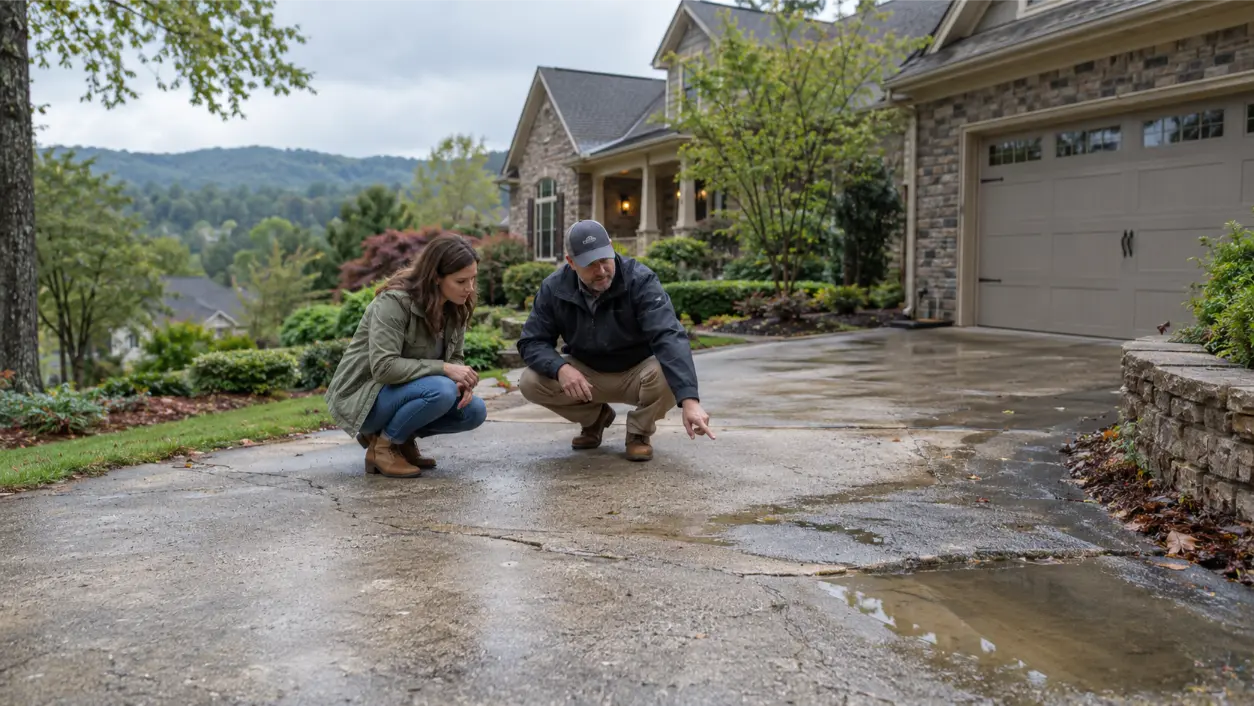
Questions to Ask Before You Close
- Are the cracks narrow and stable, or are they wide, displaced, or widespread?
- Is one side of any crack higher than the other?
- Does water pond on the driveway after rain?
- Does runoff move toward the garage or foundation?
- Have any slabs visibly settled or tilted?
- Are there eroded or washed-out areas along the concrete edges?
- Has the driveway been repaired before? If so, why?
- Does the current layout provide the parking and access you need?
- Would replacement likely require drainage or grading work too?
- Are there right-of-way, HOA, or local requirements that affect future work?
- Should a home inspector, engineer, drainage specialist, or concrete contractor take a closer look?
- Can you obtain a site-specific estimate before finalizing your repair budget?
A Pre-Purchase Cracked Driveway Checklist
- Photograph the entire driveway, not just the largest crack.
- Note which cracks show vertical displacement.
- Check transitions at the garage, sidewalk, street, and other slabs.
- Look for sinking panels and low areas.
- Visit after rain or review drainage evidence if possible.
- Check nearby downspouts and runoff paths.
- Look for erosion, voids, roots, and previous repairs.
- Ask the seller about the history of the cracking and repairs.
- Compare the driveway layout with your parking and access needs.
- Review the home-inspection comments and photos carefully.
- Get specialist input if the condition appears more than cosmetic.
- Build the likely repair or replacement scope into your post-purchase budget.
How Gold City Construction Fits the Evaluation
Gold City Construction provides concrete driveway installation, replacement, extensions, and residential flatwork for homeowners throughout North Georgia. Its current concrete service page says every project begins with review of the property, existing conditions, drainage considerations, access needs, and the homeowner’s goals.
If you are evaluating a North Georgia home with an aging or cracked driveway, you can review Gold City Construction’s concrete driveway services and, when appropriate for the transaction, request a free estimate for the likely post-purchase work. The company serves Dahlonega, Dawsonville, Gainesville, Cumming, Alpharetta, Milton, Canton, Woodstock, Roswell, North Atlanta, and surrounding communities.
FAQ: Buying a House With a Cracked Driveway
Is a Cracked Driveway a Deal Breaker When Buying a House?
Not automatically. Some cracks are primarily cosmetic, while others accompany settlement, drainage problems, or widespread deterioration. Look at the pattern, vertical movement, drainage, extent of damage, and likely repair scope before deciding how serious it is.
Does a Cracked Driveway Mean the Foundation Is Cracked Too?
No. A driveway is generally a separate slab-on-ground, so driveway cracking alone does not prove foundation damage. If there are separate signs of structural movement in the house, consult the appropriate home-inspection or engineering professional.
What Driveway Cracks Are More Concerning?
Cracks deserve closer review when they are accompanied by vertical displacement, sinking slabs, widening openings, widespread deterioration, repeated failed repairs, or water drainage problems. The combination of conditions is often more informative than crack width alone.
Should I Ask for a Driveway Replacement Estimate Before Closing?
If the inspection shows significant settlement, widespread cracking, poor drainage, or obvious deterioration, a site-specific estimate can help you understand the likely post-purchase cost. Whether that estimate affects negotiation is a real-estate and contract question for your agent or attorney.
Can a Cracked Driveway Be Repaired Instead of Replaced?
Sometimes. Repair feasibility depends on the cause, extent of damage, slab movement, drainage, and condition of the remaining concrete. A contractor should inspect the property before recommending repair versus replacement.
The Bottom Line
A cracked driveway should prompt investigation, not panic. The most useful clues are the crack pattern, vertical displacement, settlement, drainage, previous repairs, and whether the driveway still provides safe, practical access. A stable cosmetic crack and a sinking, water-trapping panel are very different purchase considerations.
For North Georgia buyers, document the condition during the home inspection, observe how the driveway handles water, and get site-specific professional input when the damage appears more than superficial. That gives you a clearer picture of the likely future work before you inherit it with the property.
Disclaimer: This article provides general residential-construction and home-purchase information, not structural engineering, real-estate, legal, inspection, or financial advice. Crack causes, settlement, drainage, repair methods, permit requirements, and replacement scope vary by property. Use qualified local professionals for site-specific evaluation and rely on your real-estate or legal advisers for contract and negotiation decisions.
Official and Technical Resources
- American Concrete Institute – ACI PRC-224.1 Causes, Evaluation, and Repair of Cracks in Concrete Structures
- American Concrete Institute – Guide to Design of Slabs-on-Ground
- UGA Cooperative Extension – Stormwater Management in the Home Landscape
RELATED LINK: American Concrete Institute – ACI PRC-224.1 Causes, Evaluation, and Repair of Cracks in Concrete Structures