
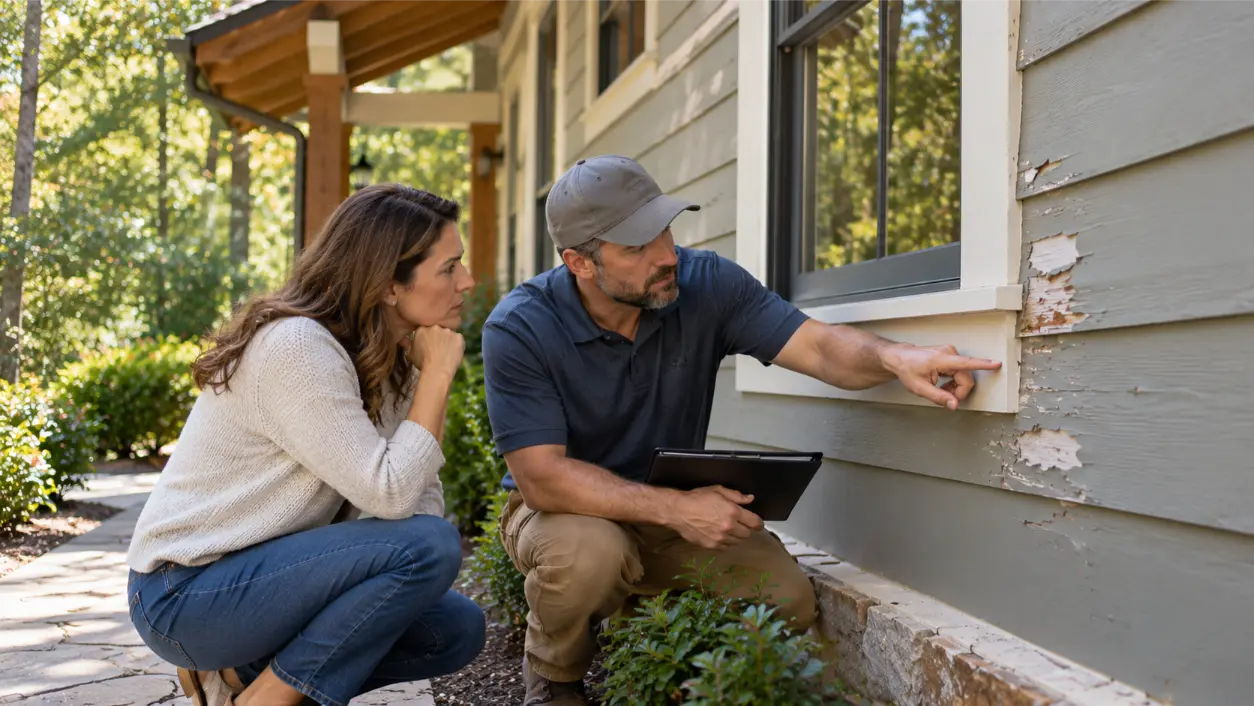
When exterior paint keeps peeling in the same part of your house, applying another coat can seem like the quickest solution.
Yet if the patch failed last year and is failing again, the real problem may be beneath the finish or somewhere above it. Water traveling behind siding, a damaged board, poor preparation, and incompatible coating layers can all cause repeated peeling. Find out why that area fails before repainting.
For homeowners in Dahlonega, Gainesville, Cumming, Alpharetta, and surrounding North Georgia communities, this guide explains seven possible causes, how to investigate safely, and when the issue deserves a siding evaluation instead of another cosmetic touch-up.
Why Peeling in the Same Spot Is an Important Clue
A small patch that repeatedly blisters, cracks, or exposes bare material suggests a more localized condition. Water may arrive from a roof edge, window, or nearby grade, or that section may have a damaged substrate.
Watch where paint separates. Is it the topcoat detaching from an older layer, or do all layers come away and leave bare wood? Is there soft material, dark staining, swelling, or recurring dampness? Those clues help guide an evaluation. The USDA Forest Products Laboratory notes that moisture fluctuations can contribute to paint failure, warping, and even decay in wood siding.
Seven Reasons Exterior Paint Fails in One Area
1. Water Is Arriving From Above the Damaged Patch
Start above the peeling area rather than directly on it. A gutter overflowing at one corner, a dripping downspout connection, a roof-to-wall intersection, or water repeatedly running down a fascia board can wet one section much more than neighboring walls. The visible damage may be below the entry point.
Look from the ground for clogged gutters, misdirected outlets, staining below eaves, and a pattern that becomes more noticeable after rain. Do not climb a roof or ladder in wet conditions. Painting over the stain will not correct the water path.
2. Siding Joints, Window Trim, or Flashing Allow Water In
Paint peeling near siding joints often deserves closer attention around board ends, trim transitions, windows, doors, and penetrations. Failed sealant, a gap, or incorrectly integrated flashing can give rain a route behind the visible finish. Caulk cannot replace correct flashing; some joints must drain or move.
The U.S. Department of Energy’s Building Science Education guidance explains that a water-resistive layer behind exterior cladding should connect correctly with flashing around windows, doors, and other openings. A professional can assess whether water is being shed outward or trapped behind the siding.
3. Splashback and Ground Moisture Keep the Lower Wall Wet
A recurring strip of peeling close to the bottom of the wall may come from rain splashing off paving, soil piled too high, irrigation hitting the siding, or poor drainage near a foundation. Landscaping or storage pressed against the house can also prevent drying. If the pattern is limited to the lowest boards, photograph the grade and note where water collects during a storm.
Lower the risk by directing sprinklers away, keeping drainage routes open, and having inappropriate soil or mulch contact evaluated. Avoid drainage changes that direct water toward structures. Required siding clearance varies with material and manufacturer instructions.
4. Moisture Is Trapped Behind the Painted Surface
Sometimes the visible exterior is dry on the day you inspect it, but the wall has a recurring moisture source. Wind-driven rain may enter through an opening, or moisture from an interior leak or high-humidity room may migrate into the assembly. If moisture cannot drain or dry appropriately, paint adhesion can suffer in the same place repeatedly.
Look for accompanying clues such as interior stains, musty odors, repeated dampness, swollen trim, or a problem that appears after specific weather. The Sherwin-Williams exterior-paint troubleshooting guide lists leaking roofs, failed joint seals, damp substrates, and moisture moving through walls among possible causes. An onsite assessment may be needed to determine which pathway actually applies.
5. The Siding or Trim Underneath Has Deteriorated
Paint needs a stable surface. Wood that has softened, split, swollen, or developed recurring rot cannot be made sound by adding primer. Some engineered-wood products may swell when damaged edges remain wet; fiber cement and other materials have their own installation and coating requirements. A cracked or loose panel can also expose layers behind it to more water.
If you see movement, persistent softness, crumbling edges, significant warping, or repeated failure across several neighboring boards, ask for a closer siding inspection. Gold City Construction’s siding installation and replacement services include evaluating visible damage and helping homeowners consider appropriate replacement materials. Not every isolated paint defect requires new siding.
6. Old, Dirty, Glossy, or Loose Coating Was Painted Over
Sometimes the wall is sound and relatively dry, but the new paint never bonded properly. Residual chalking, dirt, grease, mildew, glossy older paint, loose flakes, or insufficient primer can prevent adhesion. Where a new coat separates cleanly from an older intact layer, preparation or coating compatibility deserves investigation.
A durable repair generally starts with removing unsound coating by an appropriate safe method, cleaning and preparing the remaining surface, choosing the right primer when required, and observing product instructions. Simply applying thick paint over peeling edges may hide the problem briefly, then reproduce it. Treatments vary by substrate.
7. The Coating System or Application Conditions Were Wrong
Paint can fail when a product is unsuitable for the existing finish or siding material, or when application conditions do not match its instructions. Rain, dew, excessive humidity, surface temperature, insufficient drying time, or incorrect recoat intervals can interfere with curing and adhesion. Some older coating combinations need special preparation before a different product is applied.
When repainting the house but the problem returns, ask about products, primer, surface preparation, and weather conditions. Do not assume every peeling patch is moisture damage: two neighboring areas painted on different days may fail for different reasons.
How to Investigate the Problem Before Repainting
- Document the location. Take clear photos, including the surrounding windows, roofline, downspouts, grade, and adjacent siding. Note when the patch was last repainted.
- Compare wet and dry weather. From a safe location, observe runoff during rain. A leak may be evident only during wind-driven storms or a particular gutter overflow.
- Look for connected symptoms. Record swelling, stains, loose seams, soft trim, interior marks, and nearby peeling. Avoid prying siding off just to investigate.
- Identify the failure layer. Is only the newest paint flaking, or is the underlying substrate being exposed? Ask a qualified painter or exterior specialist to assess adhesion and moisture if needed.
- Resolve the actual source. Depending on findings, the work might involve gutters, flashing, drainage, material repair, drying time, or coating preparation. One solution will not fit every cause.
- Recoat only when conditions are suitable. Follow the chosen coating manufacturer’s surface-preparation, substrate-moisture, primer, and weather requirements rather than using a fixed waiting period.
Important lead-safety note: Before disturbing old paint on a house built before 1978, consider potential lead exposure. The U.S. Environmental Protection Agency’s Renovation, Repair and Painting program establishes lead-safe requirements for many paid projects in pre-1978 housing. Do not dry-sand or scrape suspect paint without an appropriate lead-safe approach; ask qualified professionals about testing and applicable requirements.
When a Spot Repair May Be Enough—and When Siding Needs Attention
A localized coating repair may be reasonable when the substrate is sound, moisture entry is corrected, and the problem is limited to paint adhesion. Repainting cannot solve continued wetting.
Signs siding needs more than paint include soft or deteriorating boards, swollen edges, repeated damage around several joints, gaps that allow water behind the cladding, and visible damage that extends beyond the peeling patch. These signs call for an assessment, not an automatic full-house replacement. Depending on construction and extent, the sensible scope could range from a local material repair to replacing a larger siding section.
Gold City Construction provides siding replacement and installation in North Georgia, including options such as vinyl and fiber cement. Its project gallery illustrates its exterior work. Painting-only and roof work should be discussed with qualified specialists.
What to Ask During an Exterior Assessment
Explain when the area was painted, how each repair failed, and whether leaks or damage have appeared nearby. Ask the professional to distinguish coating failure from moisture or material defects.
- What evidence points to water entry, surface preparation, substrate damage, or another cause?
- Is the problem isolated to the coating, or does a board, trim piece, flashing detail, or water-management layer need review?
- What must be repaired and allowed to dry before any new finish is applied?
- Which material-specific installation and coating instructions apply?
- What portion of the work can be defined now, and what could change if concealed damage is discovered?
- Who is responsible for coordinating any roofing, gutter, painting, or other work outside the siding scope?
Quick Checklist Before You Buy Another Can of Paint
- Photograph the problem and record the last repaint date.
- Look safely for water stains, gutter overflow, runoff, and sprinkler overspray.
- Inspect visible siding joints, window edges, trim, and ground clearance without dismantling the wall.
- Note soft, swollen, split, or loose siding that suggests a material problem.
- Check whether the latest coating is separating from the old layer or from the substrate.
- Review the age of the home before disturbing paint; follow lead-safe guidance where applicable.
- Get a cause-based repair plan before scheduling a cosmetic repaint.
Frequently Asked Questions
Why does exterior paint peel every year in one spot?
Repeated failure can indicate a persistent water pathway, a deteriorated board, or an adhesion problem that was not corrected before repainting. The location and failure pattern are clues, not a diagnosis. Look above and around the spot before assuming the paint itself is defective.
Does paint peeling near siding joints mean there is a leak?
Not necessarily. A joint can be an entry point for water, but coating movement or inadequate preparation can also cause peeling. Check surrounding flashing, designed drainage details, and material condition rather than sealing every opening indiscriminately.
Can I paint over peeling exterior paint if I use a good primer?
Primer cannot secure loose paint or repair rotted siding. Unsound coatings usually need appropriate removal, followed by substrate preparation and resolution of moisture issues. Product instructions determine the suitable primer and finish for the surface.
Can moisture cause exterior paint failure even when the wall looks dry?
Yes. Intermittent leaks or trapped moisture may not be visible every day. Stains, swelling, interior signs, and rain-related patterns can justify further evaluation, particularly around windows and roof-to-wall intersections.
Is repainting or siding replacement the better investment?
That depends on the condition of the siding and source of failure. A sound surface with a corrected adhesion issue may need only coating work; damaged or moisture-affected boards may need repair or replacement. Ask for a scope based on observed conditions.
Is Gold City Construction a house-painting contractor?
Gold City’s current published services focus on siding installation and replacement, concrete work, decks, and porches. For recurring peeling linked to siding deterioration, the company can discuss a siding assessment. Confirm any other needed painting or specialty repair work separately.
Fix the Cause Before Refreshing the Finish
If one exterior patch keeps failing, another paint coat should be the final step, not the first. Identify where water travels, whether the siding remains sound, and whether the previous finish was prepared correctly. Gold City Construction serves Dahlonega, Dawsonville, Gainesville, Cumming, Alpharetta, and surrounding North Georgia communities. Homeowners with damaged siding can request a free exterior project estimate to discuss conditions and replacement options.
Construction and safety disclaimer: This article provides general homeowner education, not a water-intrusion diagnosis, structural assessment, lead-paint inspection, or project specification. Moisture sources, siding assemblies, coating requirements, and code obligations vary by home. Seek appropriately qualified help for leaks, concealed damage, lead-safe renovation, and any structural or hazardous conditions.
RELATED LINK: U.S. Department of Energy — Drainage Plane Behind Exterior Wall Cladding