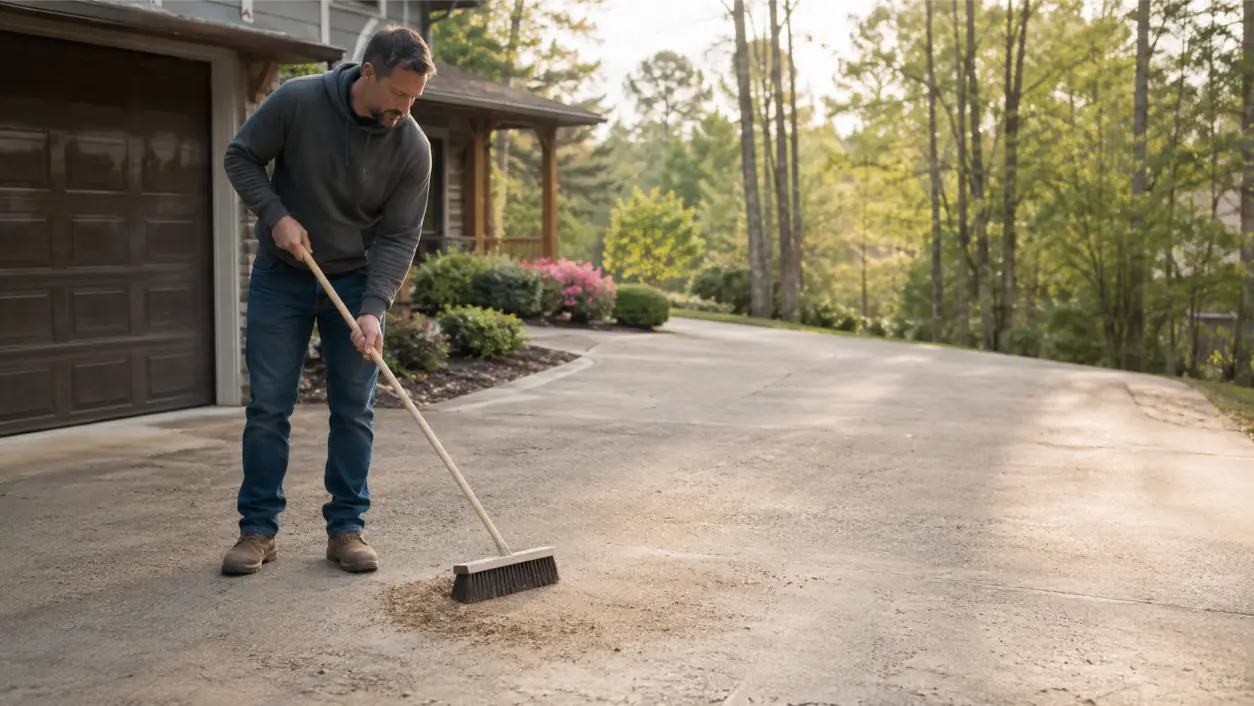
If your rough concrete driveway surface seems to be getting coarser every year, especially when sweeping brings up sand-like grit or small flakes, the change may be more than ordinary aging. Concrete can lose surface paste gradually through abrasion, scaling, moisture exposure, freeze-thaw cycling, deicing chemicals, or weaknesses created during finishing and curing. The texture alone does not reveal the cause, so the useful first step is to look at how the surface is changing and whether the deterioration is isolated or widespread.
Gold City Construction serves North Georgia homeowners with concrete driveway installation, replacement, extensions, and residential flatwork. Its current concrete service page specifically identifies crumbling edges, deteriorating surface areas, cracking, uneven sections, and drainage problems as reasons a homeowner may consider replacement. A rough surface does not automatically mean the driveway must be torn out, but it is a reason to inspect the pattern before the wear progresses.
What Does a Roughening Concrete Surface Usually Mean?
Concrete driveways normally have some texture for traction. The concern begins when the texture changes noticeably: the top surface becomes sandy, small flakes detach, shallow pits appear, or aggregate that was once covered by cement paste becomes exposed. Those symptoms can indicate that the wearing surface is losing material.
The National Ready Mixed Concrete Association describes scaling as local flaking or peeling of the finished concrete surface. In mild cases, the loss may be shallow. In more advanced cases, more aggregate becomes exposed and the driveway can take on a patchy, coarse appearance. Abrasion is different: it is gradual wear caused by traffic, friction, repeated scraping, or other mechanical action. A driveway can show more than one process at the same time.
Scaling Can Make a Driveway Feel Progressively Coarser
Scaling occurs when the upper surface of concrete breaks away in thin layers or flakes. It can begin in isolated spots and spread as the surface is exposed to repeated weather and traffic. NRMCA guidance notes that scaling is often associated with freeze-thaw exposure, deicing chemicals, poor finishing practices, or inadequate curing and protection of the new concrete.
North Georgia does not experience the same winter conditions as colder northern climates, but freezing weather does occur, particularly in the northern part of the state. When concrete becomes saturated and temperatures drop below freezing, water in the pore system can expand. Repeated cycles can stress a vulnerable surface. Deicing salts can add another source of deterioration, especially on concrete that is young, highly saturated, or not properly proportioned for that exposure.
Improper Finishing Can Leave a Weak Surface Layer
One reason surface deterioration can appear years after installation is that the weakness may have been created on placement day. The American Concrete Institute has documented that finishing while bleed water is still present, adding water to the surface during finishing, or excessively working the surface can create a weaker upper layer with lower abrasion and scaling resistance.
That weak layer may look acceptable when the driveway is new. Over time, tires, weather, pressure washing, runoff, and ordinary use can wear through it. Homeowners then begin noticing loose fines when sweeping or a surface that looks increasingly open and grainy.
This is why the visible symptom does not always tell you when the underlying problem began. Surface wear today can sometimes trace back to mixture selection, finishing, or curing conditions from the original installation.
Curing Matters After the Concrete Is Placed
Concrete needs adequate curing so the cement can continue hydrating and the surface can develop strength and durability. If moisture leaves the slab too quickly during the early curing period, the surface can be more vulnerable to dusting, abrasion, and scaling. NRMCA and ACI both emphasize curing as a major part of producing durable concrete slabs.
Homeowners typically cannot diagnose an old curing problem from appearance alone. However, a driveway that begins losing fine surface material relatively early, despite normal use, may justify a professional evaluation of whether the distress is primarily superficial or connected to broader slab deterioration.
Abrasion Can Gradually Expose More Aggregate
Not every rough driveway is scaling. Abrasion can slowly remove the softer cement paste at the surface. Vehicle traffic, turning tires, dragging equipment, metal snow tools, aggressive cleaning, and repeated friction can all contribute to wear. Once the paste wears away, the coarse aggregate becomes more visible and the driveway can feel rougher underfoot.
Some intentional concrete finishes are designed to expose aggregate. The concern here is an unplanned change from a previously smoother broom or troweled surface to a patchy, eroded texture. If the aggregate exposure is concentrated in wheel paths or high-traffic areas, abrasion may be part of the explanation.
Drainage and Moisture Can Accelerate Deterioration
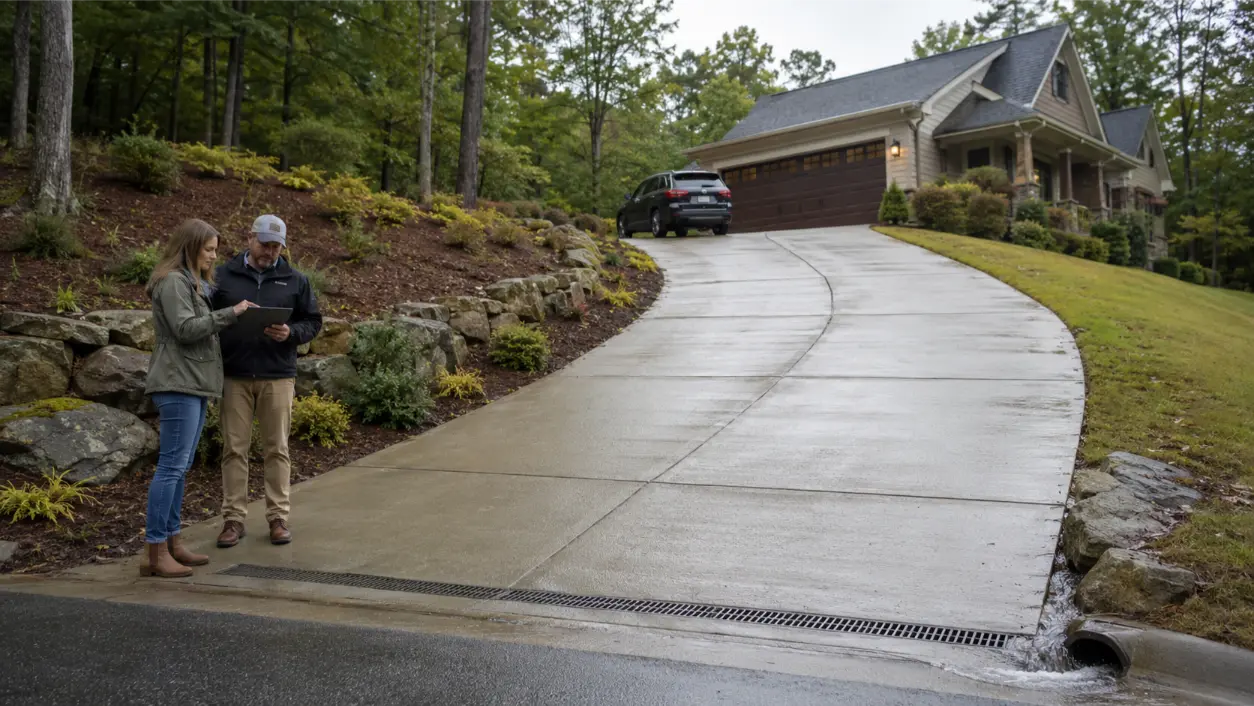
Water alone does not automatically damage sound concrete, but persistent saturation can make several deterioration mechanisms more severe. Standing water, poor drainage, runoff concentrated at slab edges, or soil conditions that keep sections wet can increase freeze-thaw exposure and contribute to movement around the slab.
Gold City Construction says its concrete project planning considers existing conditions, drainage, access, layout, and homeowner goals. That is important because a replacement that addresses only the visible surface but ignores why water collects in the same location may not solve the full property problem.
How to Tell Normal Wear From a Larger Problem
A rough surface should be evaluated together with the rest of the driveway. Look for patterns rather than one isolated blemish.
- Loose sand, fines, or small flakes appear repeatedly after sweeping.
- The rough area is expanding from year to year.
- Aggregate is becoming exposed in places that were previously covered.
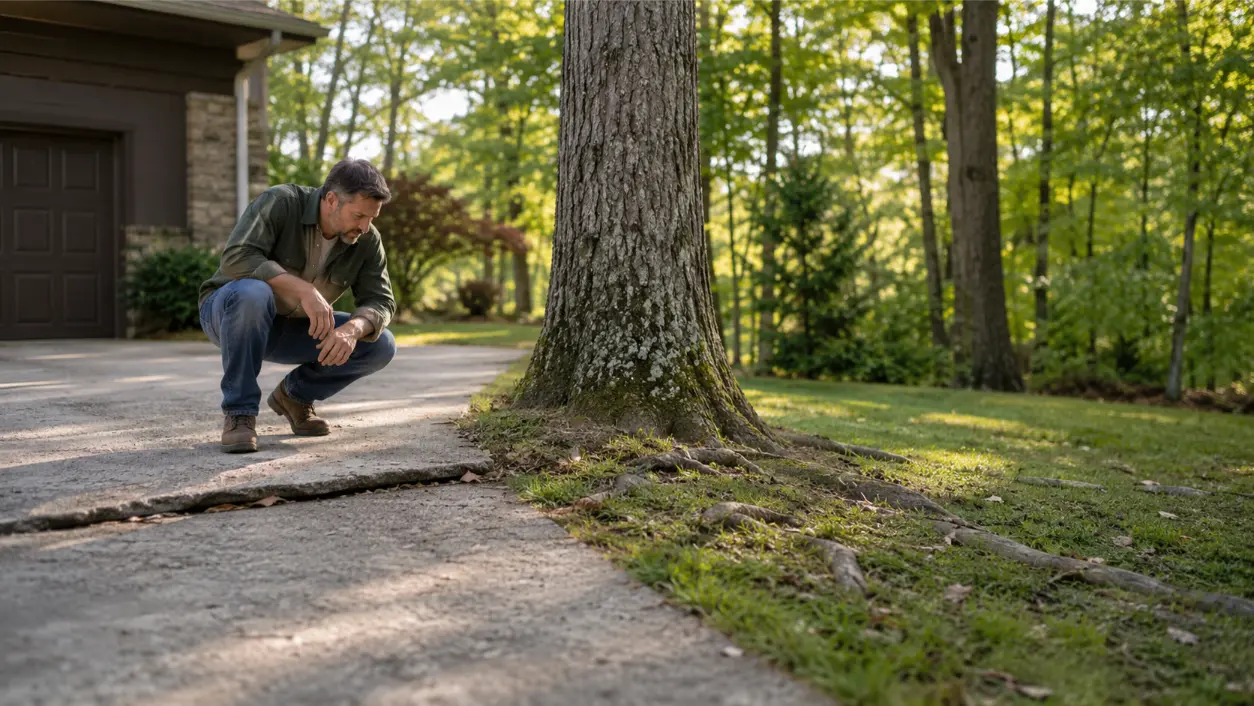
- Edges are crumbling or breaking away.
- Scaling or shallow pits are widespread rather than isolated.
- Cracks are widening or connecting with surface deterioration.
- Sections are sinking, rocking, or becoming uneven.
- Water collects or drains toward damaged areas.
- Vehicle traffic creates new chips or fragments from already weak zones.
If the slab remains level and structurally sound and the deterioration is shallow, repair or resurfacing may sometimes be considered. If the distress is widespread, deep, combined with movement, or tied to drainage and layout problems, replacement may be the more practical long-term option. The right answer depends on the actual condition of the slab.
Why Sweeping Up Loose Material Is a Useful Warning Sign
Occasional dirt or grit is normal. Repeatedly collecting cement-like fines, sand, flakes, or small pieces from the driveway surface is different because it suggests the wearing layer itself may be breaking down.
Take photos every few months from the same position. Mark the edges of deteriorated areas with a removable reference point and compare them after a season. This simple record can help you determine whether the texture is stable or actively progressing.
What Not to Do With a Deteriorating Surface
- Do not assume a high-pressure wash will repair the problem; aggressive pressure can remove more weak material.
- Do not cover active deterioration with a coating without first understanding whether the base surface is sound enough to support it.
- Do not use deicing chemicals casually on vulnerable concrete without checking product and concrete recommendations.
- Do not ignore drainage that repeatedly leaves the same section saturated.
- Do not assume every rough area requires full replacement; shallow surface problems and structural problems are not the same.
Repair, Resurface, or Replace?
The appropriate response depends on depth, extent, movement, drainage, and the expected remaining life of the slab. A contractor may look at how much of the surface is affected, whether the concrete below the damaged layer is sound, whether sections are sinking, and whether the driveway layout still serves the household.
Gold City Construction’s current concrete service page notes that replacement may be appropriate for driveways with widespread surface damage, crumbling areas, uneven or sinking sections, drainage problems, or an aging layout that no longer works well. It also offers driveway extensions when additional parking or access is part of the homeowner’s goal.
That means a surface evaluation can be a good time to consider the whole driveway rather than only the rough patch: drainage, parking width, approach, walkways, and how the property is actually used.
A Homeowner Inspection Checklist
- Sweep the driveway and note whether loose surface material returns quickly.
- Photograph the rough areas in consistent lighting.
- Check whether aggregate exposure is isolated, in wheel paths, or widespread.
- Look for flakes, shallow pits, crumbling edges, and connected cracking.
- Watch the driveway during rain for ponding or concentrated runoff.
- Check whether any slabs have settled or become uneven.
- Note recent use of deicers, pressure washing, or heavy equipment.
- Compare older photos if available to estimate how quickly the condition is changing.
- Request an on-site evaluation if the deterioration is expanding or affecting a large part of the driveway.
Frequently Asked Questions
Why is my concrete driveway getting rough?
A driveway can become rougher because surface paste is being lost through scaling, abrasion, weather exposure, or a weak surface layer associated with finishing or curing. The visible pattern and depth of deterioration help distinguish among possible causes.
What causes concrete driveway scaling?
NRMCA and ACI sources associate scaling with factors that can include freeze-thaw exposure, deicing chemicals, inadequate air entrainment for severe exposure, improper finishing, and inadequate curing. A site inspection is usually needed to determine which factors are most relevant to a specific driveway.
Why is aggregate showing through my driveway?
Aggregate may become visible when the surface paste wears or flakes away. Intentional exposed-aggregate finishes are different; unexpected patchy exposure on a previously uniform driveway can indicate abrasion or scaling.
Can pressure washing make a rough driveway worse?
It can if the surface is already weak. High pressure may remove loose or deteriorated paste. Use conservative cleaning methods and avoid treating pressure washing as a repair for scaling or surface breakdown.
Does a rough driveway need to be replaced?
Not always. Shallow, localized surface deterioration may have repair or resurfacing options, while widespread scaling, crumbling, settlement, drainage problems, or extensive cracking can make replacement more practical. The decision should be based on the condition of the entire slab.
Watch the Pattern, Not Just the Texture
A concrete driveway does not need to remain perfectly smooth to be serviceable, but a surface that gets progressively rougher deserves attention. Loose material, scaling, widening rough areas, crumbling edges, standing water, and slab movement are more informative than texture alone.
Gold City Construction provides concrete driveway installation, replacement, extensions, and flatwork for homeowners in Dahlonega, Dawsonville, Gainesville, Cumming, Alpharetta, Milton, Canton, Woodstock, Roswell, North Atlanta, and surrounding North Georgia communities. If your driveway is deteriorating and you are unsure whether repair or replacement makes sense, you can review the company’s concrete driveway services or request a free estimate for an on-site evaluation.
Construction and safety disclaimer: This article provides general educational information and is not a substitute for an on-site evaluation by a qualified contractor, engineer, or other appropriate professional. Concrete deterioration can have multiple causes, and repair or replacement decisions should consider site conditions, drainage, slab movement, depth of damage, local requirements, and the intended use of the driveway.
RELATED LINK: National Ready Mixed Concrete Association — CIP 2: Scaling Concrete Surfaces