

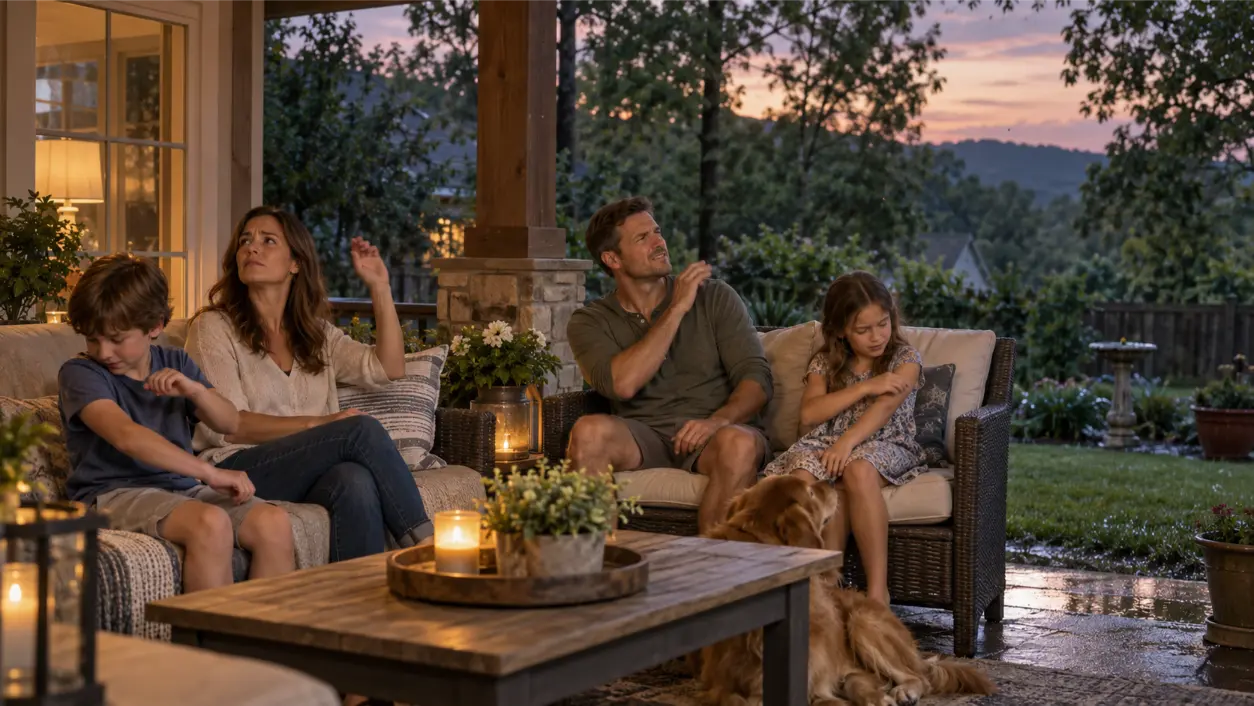

If mosquitoes on porch seating turn every warm evening into an indoor evening, the problem is often bigger than the porch itself. Mosquito pressure around a North Georgia outdoor living space can increase when nearby containers, gutters, planters, drainage areas, tarps, or low spots hold standing water. An open porch or patio also leaves people fully exposed to flying insects, while still air can make a seating area more comfortable for mosquitoes. The best response is usually layered: remove breeding water, improve the immediate environment, use airflow where practical, choose lighting carefully, and consider screening when the family wants a more protected outdoor room.
Start With the Water, Not the Mosquitoes You See Flying
Mosquito control around a home starts before adult mosquitoes begin biting. CDC says mosquitoes lay eggs in or near water and recommends emptying, scrubbing, turning over, covering, or discarding water-holding items at least weekly. UGA Cooperative Extension similarly describes eliminating standing water as the most important and effective practice for reducing mosquito populations around the home.
That means the source may be several yards away from the chair where you are getting bitten. A porch can feel like the problem even when the breeding water is in a plant saucer, clogged gutter, rain barrel, toy, tarp, wheelbarrow, drainage structure, or small depression elsewhere on the property.
Common Water-Holding Spots Near Outdoor Living Areas
- Flowerpot saucers and decorative planters.
- Buckets, watering cans, toys, and pet bowls left outside.
- Tarps or furniture covers that form shallow pockets.
- Birdbaths and fountains that are not maintained.
- Clogged gutters and poorly draining downspout areas.
- Rain barrels that are not tightly covered or screened.
- Low areas beside patios, decks, stairs, or walkways.
- Containers stored upside down that still trap water in rims or recesses.
Why the Problem Often Gets Worse After Rain
Rain can fill gutters, plant trays, tarps, toys, and landscape depressions that are normally dry. After a storm, walk the area before the water evaporates and check under furniture, around stairs, beside retaining edges, at downspouts, and anywhere the grade creates a shallow basin.
A Screened Porch Changes Exposure, Not the Entire Yard
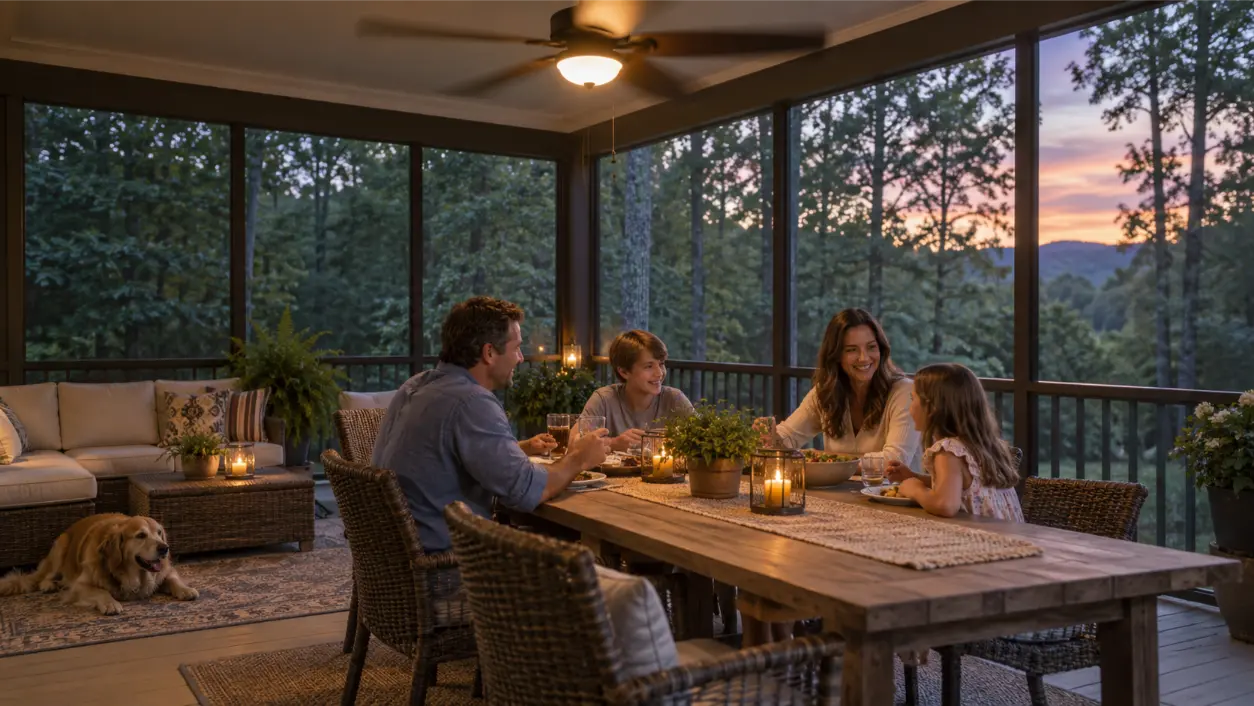
Gold City Construction currently builds screened porches and describes them as outdoor spaces that provide airflow, shade, and added protection from insects and debris. That is an important distinction: screening is a physical barrier around the usable space. It does not eliminate mosquitoes from the yard or remove breeding habitat elsewhere on the property.
EPA and CDC recommend well-maintained screens as a structural barrier to reduce mosquito entry. For a homeowner who routinely stops using a porch after dusk, a screened enclosure can therefore address the daily-use problem more directly than repeatedly treating an open seating area.
A screened porch works best as a complete barrier. Torn mesh, door gaps, and openings around framing or utility penetrations can reduce the benefit.
Screening Is Most Useful When the Lifestyle Calls for It
A screened porch may be a strong fit when:
- The family wants to eat or relax outside most evenings.
- Children regularly use the space during mosquito season.
- The existing porch already has a roof and could potentially be evaluated for screening.
- The household values airflow but wants more separation from insects and debris.
- Outdoor furniture and dining are central to how the space is used.
- The current pattern is to abandon the porch whenever mosquito activity increases.
It may be less important when the space is used mainly for occasional grilling, sun exposure, or short daytime activities. The right structure should match the routine rather than being chosen solely because insects are annoying during a few weeks of the year.
Airflow Can Make a Seating Zone More Comfortable
Mosquitoes are weak fliers compared with the moving air produced by a fan. UGA Extension has specifically recommended a well-placed porch or patio fan as a practical localized strategy, and other extension guidance likewise notes that moving air can make it harder for mosquitoes to stay around people.
A fan does not remove breeding water or protect the entire yard; its value is local. On a covered porch, fan placement can be considered during design when electrical work and clearances support it.
Lighting Can Influence the Evening Experience
Outdoor lighting is often blamed for every insect around a porch, but the practical guidance is more nuanced. EPA says yellow “bug” lights tend to attract fewer mosquitoes than ordinary lights, while also emphasizing that those bulbs are not repellents.
Treat lighting as one design choice, not a cure. The goal is to illuminate steps, entries, and seating safely without assuming a particular bulb will create a mosquito-free zone.
Dense, Shaded Areas Can Give Adult Mosquitoes Places to Rest
Adult mosquitoes often rest in cool, shaded, humid areas. Keep vegetation around the seating zone reasonably maintained so airflow is not blocked and hidden water-holding containers are easier to spot. This does not require removing healthy landscaping.
Do Mosquito-Repelling Plants Solve the Problem?
Not reliably. Do not replace source reduction, screens, airflow, or EPA-registered repellents with a few aromatic plants. Also check plant saucers after rain and irrigation because they can hold breeding water.
What About Sprays, Foggers, and Mosquito Treatments?
Chemical control can have a role, but EPA and CDC emphasize source reduction and structural barriers first. CDC advises using larvicides only for standing water that cannot be dumped, drained, or covered and following the label. EPA-registered personal repellents can reduce bites when used as directed. Gold City Construction should not be treated as a pesticide adviser.
Drainage Problems Near the Porch Deserve Their Own Review
If water repeatedly stands beside a porch, patio, stair landing, or walkway, the issue may be partly drainage-related. Correcting a low area, gutter discharge, or hardscape drainage path can reduce water-holding habitat, but runoff should not simply be redirected toward the house, a neighbor, or an inappropriate discharge point.
A Screened Porch Still Needs Maintenance
Screening needs periodic attention. Check mesh for tears, confirm doors close properly, and keep nearby gutters and downspouts working. Gold City Construction does not publish a universal screen material or maintenance schedule, so project details should be confirmed during planning.
A Practical Mosquito-Season Porch Checklist
- Walk the property after rain and identify every place holding water.
- Empty, scrub, cover, or remove water-holding containers at least weekly.
- Check gutters, downspouts, plant trays, tarps, toys, and furniture covers.
- Correct recurring low spots or drainage problems when practical.
- Keep vegetation around the seating area maintained enough for reasonable airflow.
- Use a porch or patio fan for localized air movement when appropriate.
- Review outdoor lighting and avoid expecting “bug” bulbs to work as repellents.
- Repair torn screens and door gaps on existing screened spaces.
- Use EPA-registered personal repellents according to the label when needed.
- If standing water cannot be removed, use only an appropriate labeled larvicide or seek qualified pest-control guidance.
- If the family consistently avoids the space because of insects, consider whether a screened porch better matches the way you want to live outdoors.
- Request a site-specific construction estimate before assuming an existing deck or porch can simply be screened in.
How Gold City Construction Fits the Project
Gold City Construction builds custom decks, covered porches, screened porches, deck replacements, and outdoor living spaces for homeowners across North Georgia. The company specifically positions screened porches for homeowners who want airflow, shade, and added protection from insects while still enjoying an outdoor setting.
If mosquitoes are one reason your family has stopped using an existing porch or patio, start by reviewing Gold City Construction’s decks and porches services. If a screened porch, covered-and-screened conversion, or larger outdoor-living project may fit your property, request a free estimate so the home layout, existing structure, intended use, and project conditions can be reviewed on site.
FAQ: Mosquitoes Around Porches and Patios
Why Are Mosquitoes So Bad Around My Porch?
Standing water nearby is one of the most important things to check. Mosquitoes can develop in small containers, plant trays, gutters, tarps, drainage areas, and other water-holding locations. Adult mosquitoes may also rest in shaded, humid vegetation near the seating area.
Will a Screened Porch Keep All Mosquitoes Out?
A well-built and maintained screen enclosure can substantially reduce insect entry, but no outdoor structure should be described as completely mosquito-proof. Doors open, screens can be damaged, and small gaps can develop. Screening also does not reduce mosquito populations elsewhere in the yard.
Does a Porch Fan Help With Mosquitoes?
It can help locally. Extension guidance notes that mosquitoes are weak fliers and that moving air from a porch or patio fan can provide relief around a seating area. A fan does not replace standing-water control or personal protection.
Do Yellow Bug Lights Repel Mosquitoes?
No. EPA says yellow bug lights tend to attract fewer mosquitoes than ordinary lights, but they are not repellents. Lighting should be treated as one part of the overall outdoor-space plan.
Should I Screen My Existing Deck or Porch?
Possibly, but the existing structure should be evaluated before adding walls, screens, doors, or a roof. Framing, foundations, roof geometry, stairs, railings, electrical needs, code requirements, and the way the space connects to the home can affect the scope.
The Bottom Line
Mosquito problems around a porch usually improve most when homeowners remove standing water first, check drainage, maintain the immediate landscape, use airflow for localized comfort, and use repellents appropriately. Then decide whether the family’s routine calls for a physical barrier.
For North Georgia homeowners who want more usable evenings outside, a screened porch can add insect protection while preserving airflow and the outdoor feel. It is part of a broader mosquito-reduction strategy, not a promise that mosquitoes will disappear.
Disclaimer: This article provides general residential-construction, mosquito-prevention, and outdoor-living information, not medical, pesticide, structural engineering, drainage, electrical, code, or legal advice. Mosquito species, disease activity, drainage conditions, screen performance, pesticide rules, and construction requirements vary by property and jurisdiction. Follow CDC and EPA public-health guidance, use pesticide products only according to their labels, and obtain site-specific professional guidance for construction or drainage work.
Official Public-Health Resources
- CDC – Mosquito Control at Home
- U.S. EPA – Tips to Prevent Mosquito Bites
- UGA Cooperative Extension – Mosquito Control Around the Home
RELATED LINK: UGA Cooperative Extension — Mosquito Control Around the Home