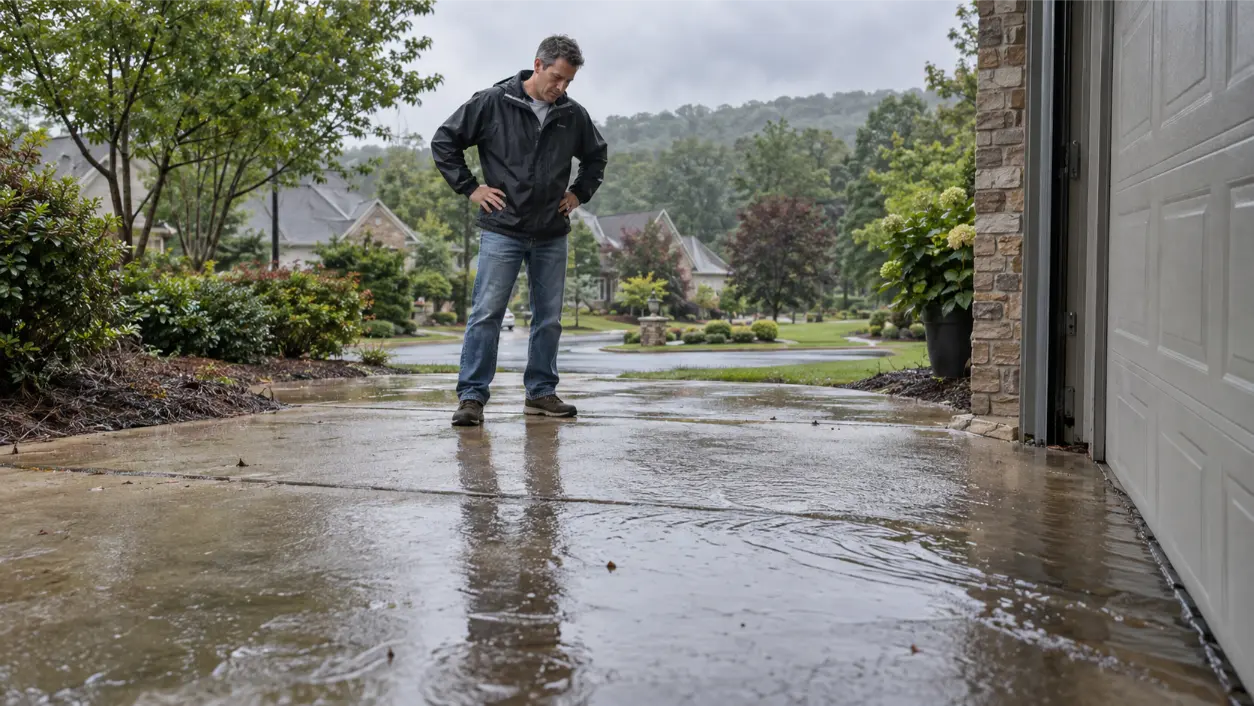


If you have a slippery concrete driveway after rain, the problem is usually not one single defect. Wetness creates a thin film between shoes or tires and the concrete, and traction can drop further when the surface is very smooth, coated with a slick sealer, covered with algae or organic residue, or shaped so water stays on the pavement.
The safest way to respond is to identify which of those conditions is present instead of assuming every wet driveway needs the same treatment.
Gold City Construction serves North Georgia homeowners with concrete driveway installation, replacement, extensions, and residential flatwork. Its current concrete process includes review of existing conditions, drainage, access needs, and property layout before recommending a project scope. That matters for slip concerns because the finished texture and the way water leaves the driveway both affect how the surface performs in wet weather.
Why Wet Concrete Can Lose Traction
Dry concrete has microscopic texture that helps shoes and tires grip the surface. When water fills the small valleys in that texture, contact between the surface and footwear or tires changes. The result can be noticeably lower friction, especially on a smooth or contaminated surface.
The American Concrete Institute notes that slip resistance depends on factors including surface finish, texture, and any applied sealer. In practical terms, a wet broom-finished driveway usually behaves differently from a highly smooth, polished, or heavily sealed surface. A driveway can also become more slippery over time if dirt, algae, leaves, oils, or other residue build up in shaded or poorly drained areas.
Surface Finish Is One of the Biggest Factors
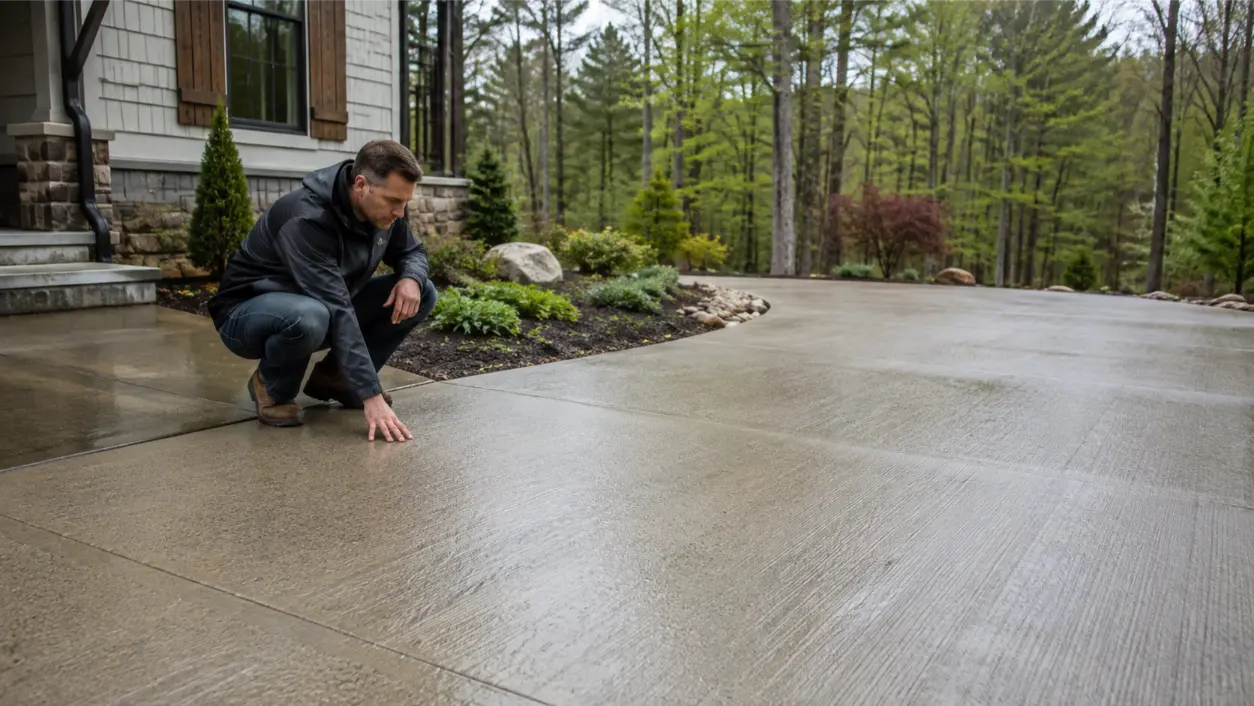
Exterior concrete is commonly finished with texture rather than left extremely smooth. The National Ready Mixed Concrete Association recommends using an appropriate surface texture for the application and specifically notes that a medium or fine push-broom finish can provide a non-slip surface.
A broom finish creates shallow grooves across the concrete. Those grooves increase surface texture and help water move away from the contact points under shoes and tires. The exact direction and depth of the broom texture should be planned for the use of the slab rather than applied randomly.
If an existing driveway was finished unusually smooth, especially on a slope, it may feel significantly slicker when wet. That does not automatically mean replacement is necessary, but it is a reason to have the surface evaluated before applying coatings or trying aggressive do-it-yourself grinding.
Sealers Can Change Wet Slip Resistance
Some concrete sealers alter the feel and friction of the surface. ACI guidance on slip resistance identifies applied sealers as one of the variables that can affect the final surface condition. A glossy or film-forming product may behave differently when wet from an untreated broom-finished slab.
If a driveway became slippery soon after sealing, identify the exact product before trying another coating. Some systems can use traction additives or aggregates, but suitability depends on the sealer chemistry, the existing concrete, exposure, and manufacturer instructions. Adding an incompatible product can create adhesion or appearance problems without solving the original slip issue.
Algae, Organic Growth, and Residue Can Create a Slick Film
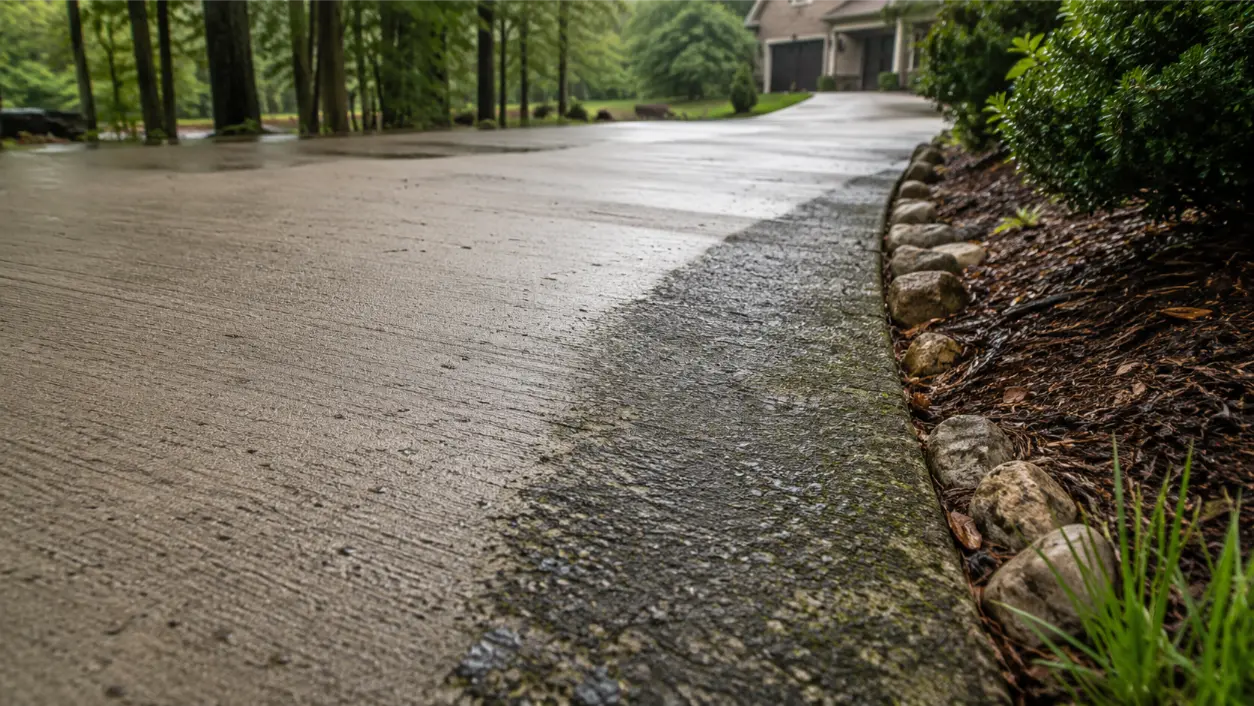
Shaded, damp concrete near trees, retaining walls, downspouts, or poorly drained landscaping can collect organic material. Green growth, dark films, decomposing leaves, pollen, or fine soil can form a slippery layer after rainfall.
University of Georgia Extension has documented how hydrated algae-like growth such as Nostoc becomes very slippery in wet conditions and is commonly associated with excess moisture, poor drainage, and compaction. Nostoc is more often discussed in lawns and landscape areas, but the same practical warning applies around hardscape: recurring moisture and biological growth can create a fall hazard wherever people walk.
If the driveway is slick only in one shaded strip, inspect that area for staining, green film, moss-like growth, irrigation overspray, downspout discharge, or runoff from adjacent soil.
Oil, Tire Residue, and Household Contaminants Matter Too
A driveway does not have to look dirty to carry a thin slippery film. Automotive fluids, tire dressings, detergents, waxes, pressure-washing chemicals, and other residues can change surface friction when mixed with water.
Pay attention to where slipping occurs. A slick spot directly beneath parked vehicles suggests a different cause from a broad shaded area that remains damp after every storm. Localized contamination may call for cleaning and source control; widespread slipperiness may point more toward finish, drainage, or a coating.
Slope and Drainage Can Turn a Small Traction Problem Into a Safety Concern
A sloped driveway already requires more traction for walking and vehicle movement. If water ponds, crosses the walking path, or repeatedly flows down the same smooth strip, the combination can increase slip risk.
Gold City Construction states that its concrete planning process considers drainage and existing site conditions. For a replacement or extension, drainage should be discussed before the new slab is poured so the finished grade works with the property rather than sending water toward entrances, garages, or low spots.
Standing water can also keep shaded sections damp for longer periods, creating more opportunity for algae or residue to remain slick. Correcting drainage may therefore improve both water management and surface safety.
Signs the Problem Is More Than Normal Wetness
- Family members repeatedly slip in the same location after rainfall.
- A section stays wet long after the rest of the driveway dries.
- Green, black, or brown film returns after cleaning.
- The concrete feels unusually smooth compared with nearby exterior slabs.
- The driveway was recently sealed and became slick afterward.
- Water ponds or flows across a normal walking route.
- A steep section lacks visible broom texture.
- Oil or other automotive residue is present where people walk.
- The surface is uneven enough that water collects in shallow depressions.
Start With Cleaning and Moisture Control When Appropriate
If the concrete has good texture but is coated with algae, dirt, or residue, cleaning may be the first reasonable step. Use a cleaning method appropriate for exterior concrete and for the contaminant involved. Follow product instructions carefully and avoid mixing household chemicals.
Pressure washing can remove surface contamination, but excessive pressure can etch or damage weak concrete. It also does not correct poor drainage or an overly smooth finish. If organic growth returns quickly, address the source of persistent moisture instead of relying only on repeated cleaning.
Traction Treatments Require the Right Surface and Product
There are products and systems designed to increase slip resistance on existing concrete, including certain coatings with aggregate or traction additives and mechanical texturing methods. ACI publishes specifications for skid-resistant surfaces using resin and aggregate systems, but these are engineered applications with surface-preparation and compatibility requirements.
For a residential driveway, do not assume a generic “anti-slip” product is suitable for vehicle traffic, weather, existing sealers, or the concrete condition. Ask about wear resistance, UV exposure, maintenance, appearance, and whether the product is intended for exterior vehicular use.
When Replacement May Make More Sense
A slippery surface alone does not automatically justify replacing a driveway. Replacement becomes more relevant when traction problems are combined with larger functional issues such as poor drainage, standing water, widespread cracking, uneven slabs, deteriorating surfaces, or a layout that no longer works for the household.
Gold City Construction’s current concrete service page lists drainage problems, uneven or sinking sections, and widespread surface damage among common reasons homeowners consider replacement. If a driveway needs major correction anyway, the replacement plan can address grade, drainage, access, and an appropriate exterior finish together.
What to Ask About on a New Driveway
- What exterior surface texture is planned for the driveway?
- How will the broom direction relate to the slope and walking path?
- Where will rainfall and roof runoff leave the concrete?
- Are there low spots or transitions that could hold water?
- Will any sealer be used, and how does it affect wet traction?
- Is the finish appropriate for the steepness of the driveway?
- How should the surface be cleaned and maintained?
A Practical Wet-Driveway Safety Checklist
- Walk the area carefully after rain and identify the exact slick zones.
- Compare those zones with dry areas for texture differences.
- Look for algae, moss-like growth, leaves, soil, oil, and other residue.
- Watch where water flows and how long each area stays wet.
- Check whether a sealer or coating was recently applied.
- Use temporary caution around high-risk walking areas until the cause is addressed.
- Clean contamination using methods suitable for concrete and the specific residue.
- Correct recurring drainage or irrigation problems where practical.
- Request a professional evaluation if the surface is extremely smooth, steep, deteriorated, or poorly drained.
Frequently Asked Questions
Why is my concrete driveway slippery after rain?
Water can reduce friction between footwear or tires and the concrete. The effect can be greater when the surface is smooth, sealed with a slick coating, contaminated with algae or residue, or shaped so water ponds on the pavement.
What concrete finish provides better traction?
NRMCA guidance identifies broom-textured finishes as a common way to create a non-slip exterior surface. The exact finish should be selected for the driveway’s slope, use, drainage, and appearance goals.
Can algae make a driveway slippery?
Yes. Wet biological growth and organic films can be very slippery. Persistent growth often indicates recurring moisture or poor drying conditions, so cleaning and moisture control may both be necessary.
Can a concrete sealer make the surface slick?
Some sealers can change surface friction, particularly when wet. If the problem appeared after sealing, identify the product and consult its manufacturer or a qualified contractor before applying another coating or additive.
Should I replace a slippery driveway?
Not automatically. Cleaning, drainage correction, or an appropriate traction treatment may be possible when the slab is otherwise sound. Replacement may be more practical when slipperiness is combined with poor drainage, uneven sections, widespread deterioration, or an unsuitable layout.
Improve Traction by Fixing the Cause, Not Just the Symptom
A wet driveway can become slippery because of surface finish, a sealer, algae, residue, slope, drainage, or several factors working together. The most useful response is to identify the pattern: where the surface is slick, what changes when it rains, and whether water or contamination keeps returning.
Gold City Construction provides concrete driveway installation, replacement, extensions, and flatwork for homeowners in Dahlonega, Dawsonville, Gainesville, Cumming, Alpharetta, Milton, Canton, Woodstock, Roswell, North Atlanta, and nearby North Georgia communities. If your driveway has recurring drainage, surface, or layout problems, you can review the company’s concrete driveway services or request a free estimate for an on-site evaluation.
Construction and safety disclaimer: This article provides general educational information and is not a substitute for an on-site safety evaluation or project-specific advice from a qualified contractor, engineer, product manufacturer, or other appropriate professional. Wet-surface traction can vary with finish, slope, contaminants, coatings, drainage, footwear, tires, and weather. Treat any area with repeated slipping as a safety concern until the cause has been evaluated and addressed.
RELATED LINK: National Ready Mixed Concrete Association — CIP 14: Finishing Concrete Flatwork